Copper prices are elevated as of January 2026, trading at approximately USD $5.80 to $6.00 per lb. When prices reach these levels, stripping your wire before selling becomes more rewarding. Stripped copper commands a higher price than insulated wire, and a reliable wire stripping machine helps you capture that difference consistently.
Scrap yards pay more for stripped copper than for insulated wire because bare copper is ready to process and easier to evaluate. With copper at $5.80–$6.00 per lb, the price gap between insulated and stripped wire represents significant income especially across regular volumes.
The Problem
A lot of scrap wire never reaches its full value. Some people throw it away. Others sell it with the insulation still attached, accepting whatever the yard offers for insulated wire.
Both choices mean leaving money behind.
Scrap yards pay more for stripped copper than for insulated wire. This price gap exists because bare copper is ready to process and easier to evaluate. When you sell wire with the jacket still on, you accept a lower category and a smaller payout.
When copper prices are high, this gap becomes more significant. At $6.00 per lb, the difference between insulated and stripped copper adds up quickly across even modest volumes. Every pound you strip instead of selling insulated means more dollars at the scale.
Many people skip stripping because they assume it takes too long or requires expensive equipment. So they settle for lower prices or discard wire that still has value. This represents real income that could be captured with the right approach and the right tools.
Why Stripping Matters More When Prices Are High
Scrap yards use different price categories for copper. Insulated wire falls into one category. Stripped copper falls into a higher-paying category.
The percentage difference between these categories stays relatively consistent. But when the base price of copper rises, that same percentage represents more actual dollars.
Consider a simple example. If stripping your wire earns you an extra $2.00 per pound compared to selling it insulated, the math becomes straightforward. Twenty pounds of stripped copper puts an extra $40 in your pocket. Fifty pounds means $100 more. Over a year of regular jobs or projects, these amounts accumulate into meaningful income.
When copper trades at lower prices, some people decide the extra effort of stripping is not worthwhile. But when prices climb to current levels, the same effort produces a larger reward. The work stays the same while the payout increases.
- Stripped copper qualifies for a higher price category than insulated wire
- The percentage gap stays consistent, but high copper prices mean more dollars
- $2.00/lb extra × 50 lbs = $100 more per batch
- Same effort, larger reward when copper prices are elevated
How Wire Stripping Works
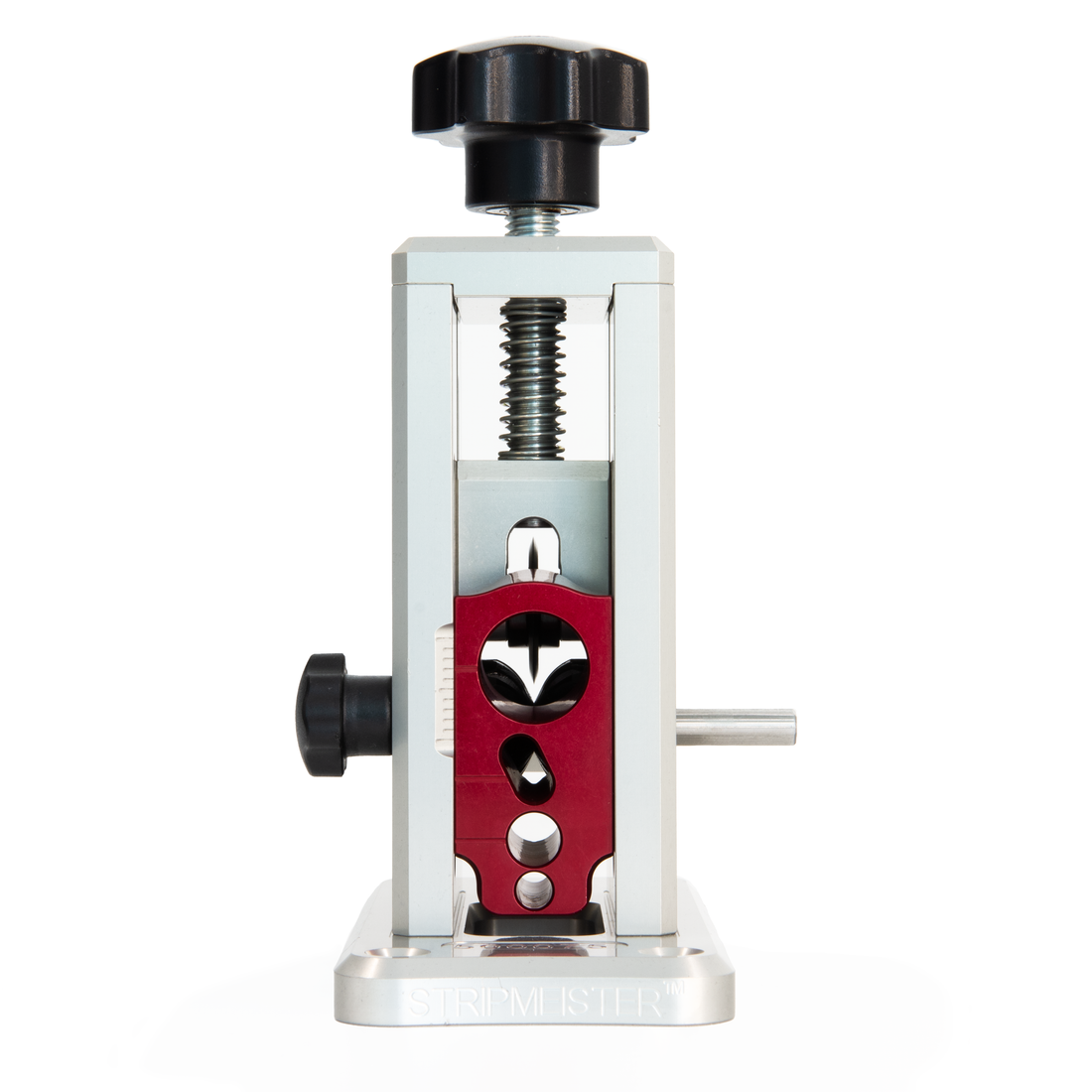
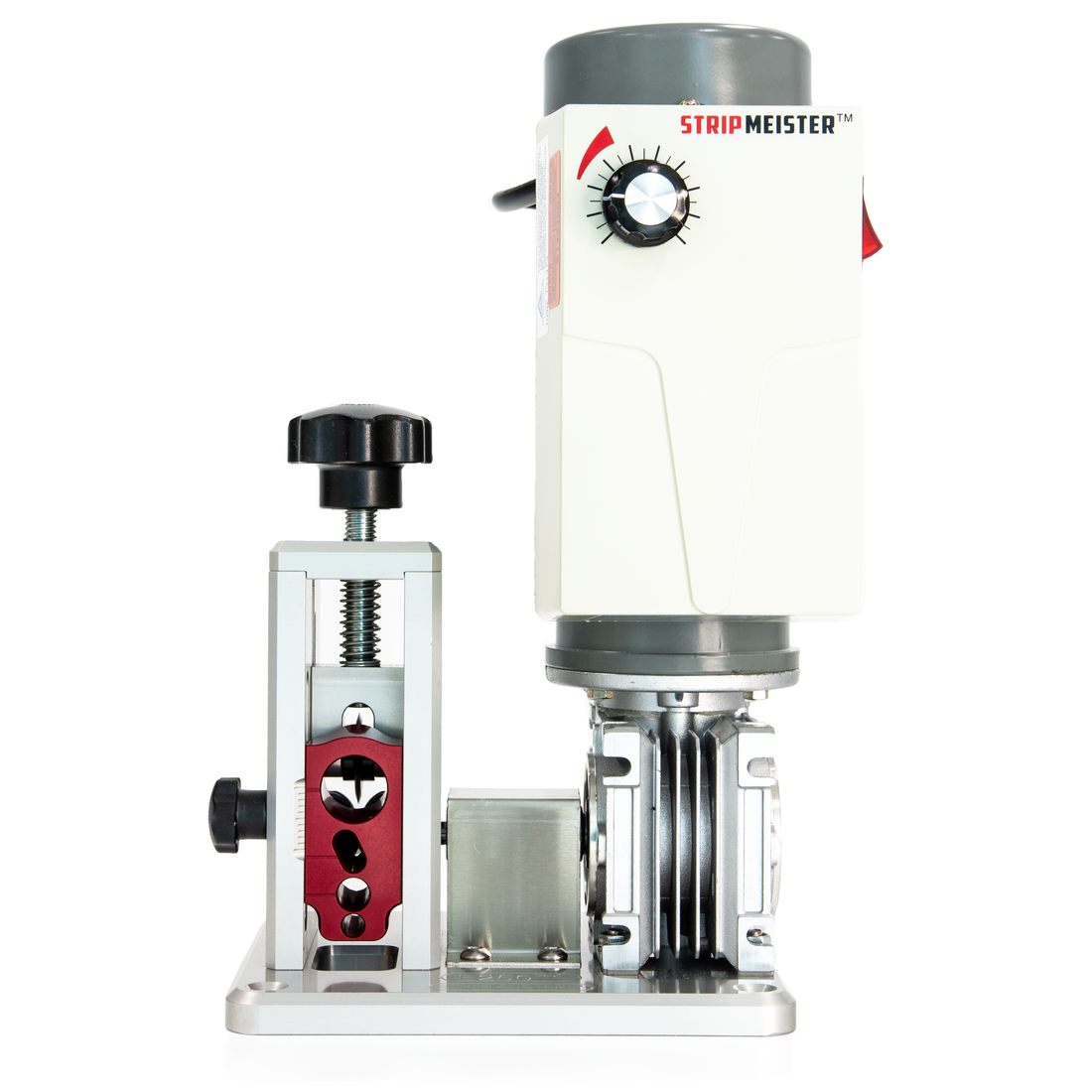
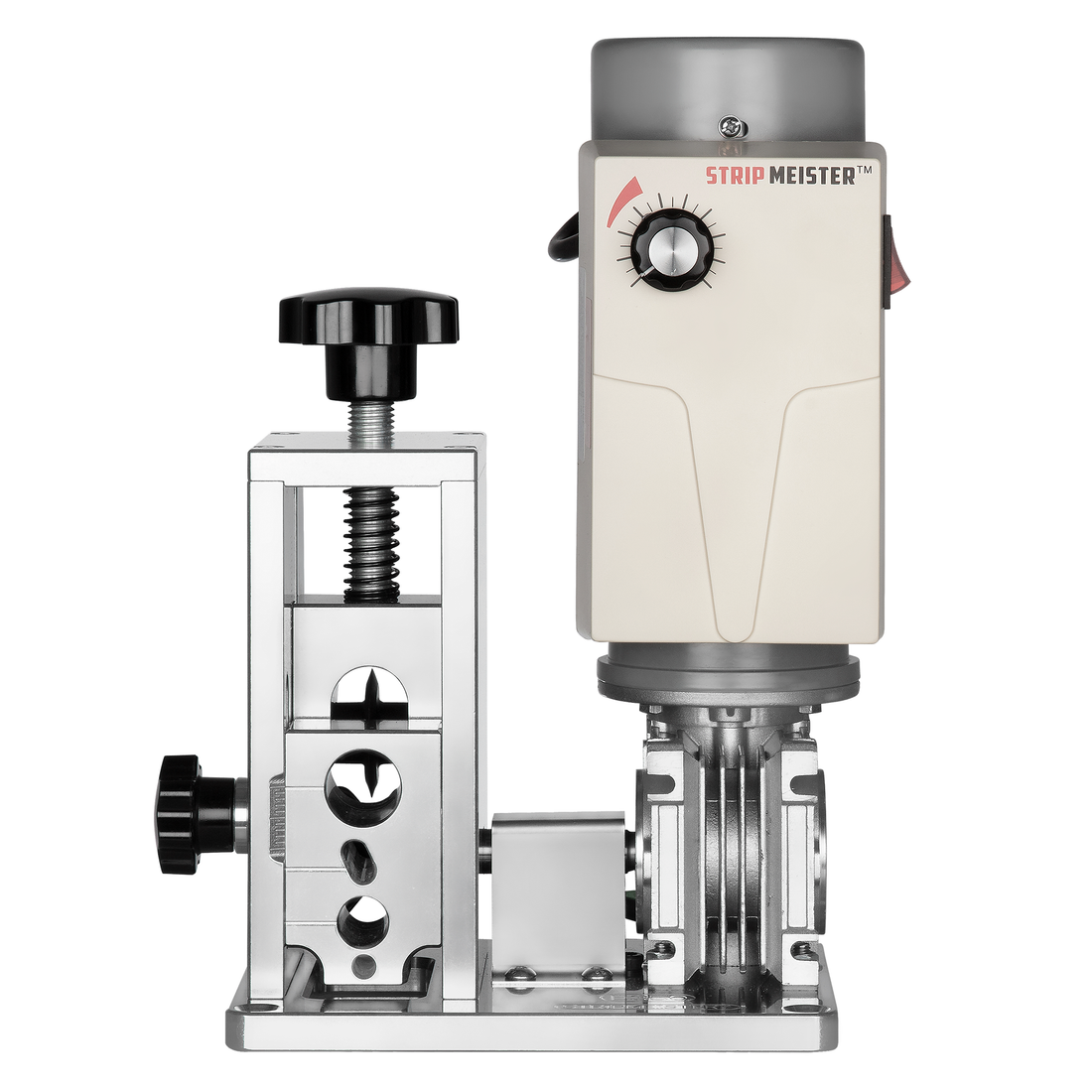
The stripping process is straightforward. You feed wire into the machine, the blade cuts through the insulation jacket, and bare copper emerges on the other side. You pull away the cut insulation and collect the copper for sale.
The basic setup process involves a few steps:
- Cut a small sample of the wire you plan to process
- Select the guide hole that matches your wire diameter
- Adjust the blade depth so it cuts through insulation without touching the copper
- Run wire through at a slow speed until you confirm the setting is correct
- Process the remainder of your batch at normal speed
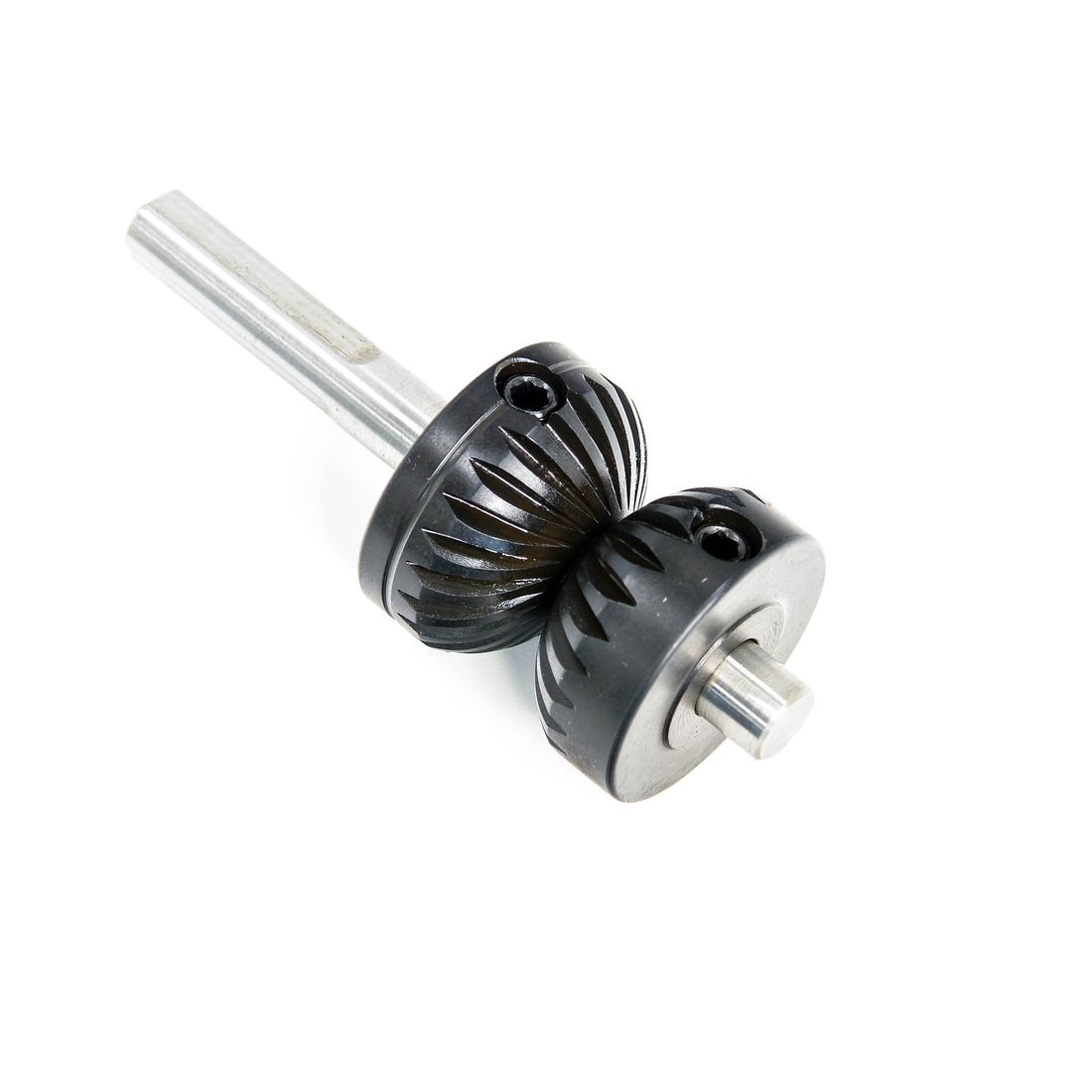
ULTRA GRIP Feeder Technology keeps wire feeding smoothly, even when working with twisted, bent, or irregularly shaped material. Every StripMeister model includes a built-in Romex adapter for handling flat residential cable without additional accessories.
After processing a few batches, most operators become comfortable with setup and can work through wire quickly and efficiently.
StripMeister Wire Stripping Machines
StripMeister builds wire stripping machines for operators who need dependable, professional-grade equipment. All models are made in Canada using quality materials and precision manufacturing.
Drill-powered unit handling wire from #18 AWG to 250 MCM. Weighing just 5 lbs, it pairs with any standard drill and suits contractors, recyclers, and DIY operators who want professional cutting quality in a compact package.
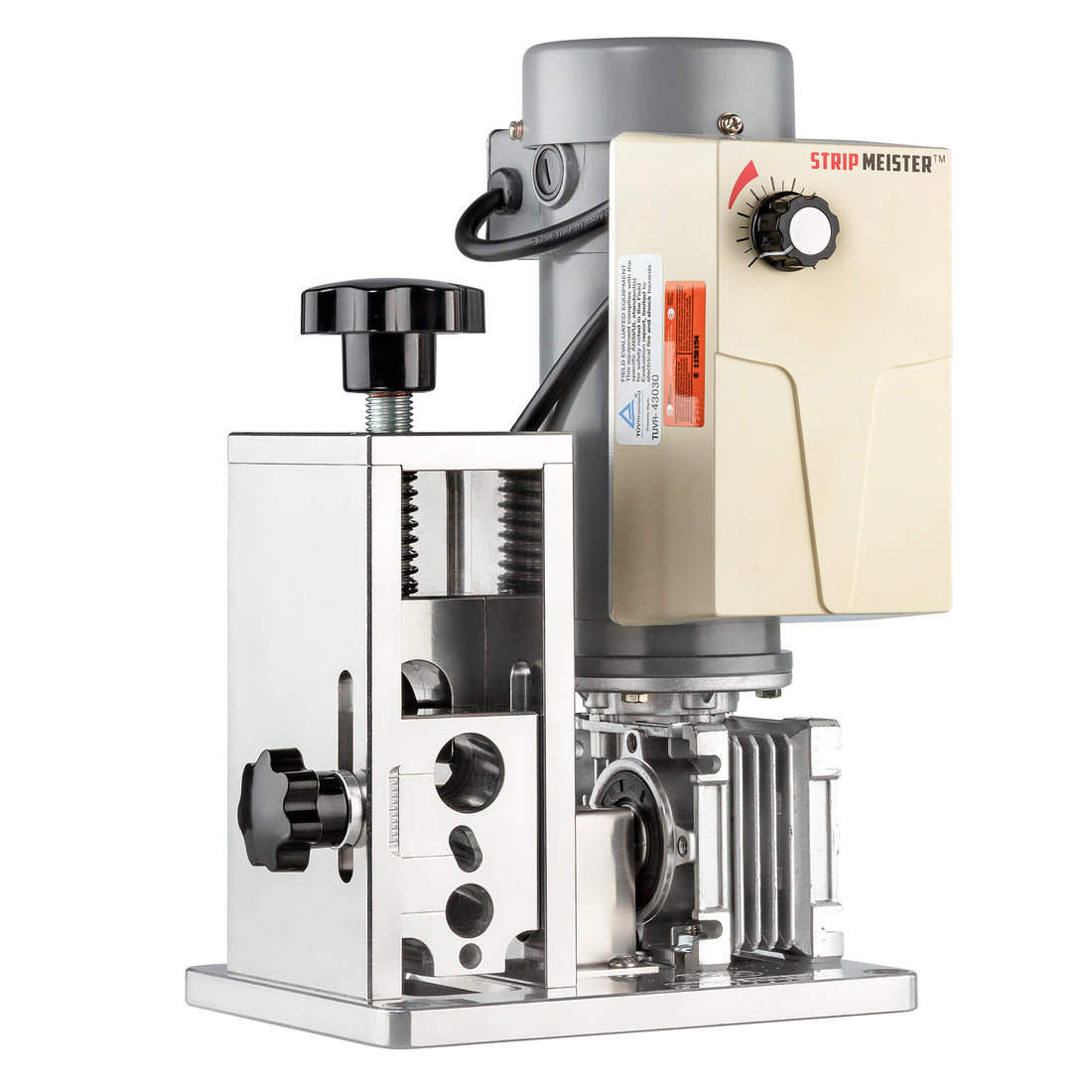
Features a dedicated 1/4 HP DC motor with variable speed control. Handles #18 AWG to 250 MCM range with TUV, ESA, and CE certification. Precision blade adjustment to 0.001" tolerance ensures accurate cuts every time.
Extends capacity to handle cables up to 1.25 inches (32 mm) in diameter. Features upper and lower wire guides, knife height indicator with calibrated scale, and fine adjustment capability to 0.004 inches. Includes spare blade.
Processes wire from #18 AWG up to 1000 MCM. The 1/2 HP DC motor with precision gearbox delivers high torque for larger cables. Upper and lower wire guides allow fast adjustments between wire sizes.
Handles the largest wire up to 2000 MCM with a 1 HP DC motor. Includes emergency stop system and spiral-groove feeder for high-volume operations processing heavy industrial cable.
All StripMeister models feature aircraft-grade aluminum bodies and heat-treated tool steel blades. This construction ensures machines perform reliably for years of daily use.
Why Quality Equipment Matters
Cheap machines wear out quickly. Components loosen, blades dull unevenly, and motors lose power after a few months of regular use. Replacing worn-out equipment repeatedly costs more over time than investing in quality from the start.
StripMeister machines are built with a different philosophy. Canadian manufacturing, precision 5-axis CNC machining, and professional-grade materials mean these machines deliver consistent performance year after year. The same cutting quality on day one thousand as on day one.
This is the "buy once, cry once" approach. A quality machine costs more upfront but eliminates the cycle of replacements, breakdowns, and inconsistent results that comes with cheaper alternatives.
Frequently Asked Questions
Stripped copper pays more than insulated wire at the scrap yard. When you remove the insulation, your material qualifies for a higher price category. The extra effort of stripping translates directly into more money for the same wire.
With copper prices elevated at $5.80 to $6.00 per lb as of January 2026, the financial benefit of stripping is more significant than during lower-price periods. The gap between insulated and stripped copper pricing represents more dollars when base prices are high.
Any volume benefits from stripping when you have the right equipment. Even smaller batches add up over time. Operators with regular scrap accumulation from jobs or projects see the benefits compound across every load.
Match the model to your typical wire sizes. For common residential and commercial wire up to 250 MCM, the Original Pro or E250 Pro handles most needs. For larger cable up to 1.25 inches, the E500 Pro offers extended capacity. The E1000 and E2000X serve operations processing heavy industrial wire up to 1000 and 2000 MCM respectively.
Both deliver quality results. The Original Pro uses your existing drill and offers a lower entry point. Electric models like the E250 Pro and above provide their own motor for plug-and-go convenience. Your choice depends on how frequently you strip and your preference for setup simplicity.
Most operators feel confident after processing a few batches. Initial setup takes a few minutes as you dial in the blade depth for your wire size. Once configured, you can work through material quickly and consistently.
All StripMeister models are made in Canada. This means quality construction, durable materials, and direct access to support when you need assistance.